2026-11-26
Why Do Car Lights Look So Blurred When Driving at Night?
Blurred or haloed lights when driving at night can come from pupil dilation, astigmatism, or cataracts. Learn the warning signs and simple habits that help reduce glare.
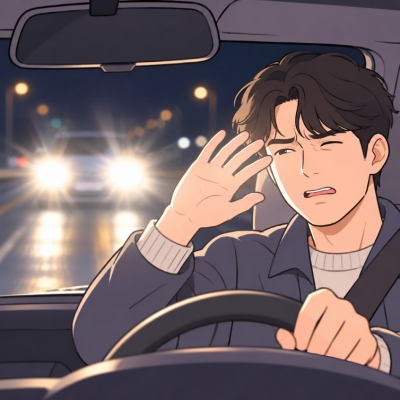
Hello! Today we're going to look at the symptom of lights appearing blurred at night. When driving at night, you may find that the headlights of oncoming cars are unusually dazzling, or that streetlights seem to spread out in multiple streaks. During the day you may have no particular discomfort, but once it gets dark, your vision can become hazy and the lights appear smeared, making driving difficult. Blurred night lights can be caused by a range of factors beyond simple eye fatigue, including astigmatism, cataracts, and dry eye syndrome. In particular, if light blurring while driving at night keeps happening or has gotten worse than before, it's worth checking the refractive state of your eyes and any changes in the lens. Today, we'll look at why lights look blurred when driving at night, the differences between astigmatism and cataracts, and how to take care of your eye health.
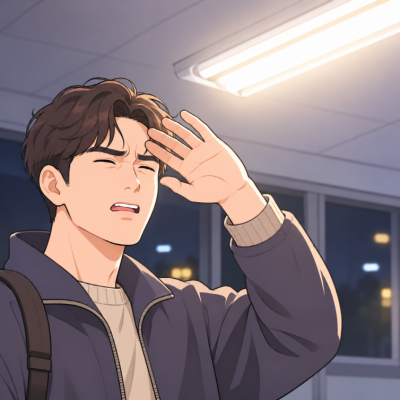
Why lights look more blurred when driving at night
Our eyes adjust the size of the pupil based on the surrounding brightness. In bright daylight, the pupils get smaller, while at night they dilate to let in more light. When the pupil is larger, more light passes through the outer areas of the eye, so refractive errors and optical irregularities can have a greater effect. For this reason, vision problems that go unnoticed during the day can become more noticeable while driving at night. Common symptoms include the following:
1) Car headlights appear to spread out in multiple streaks
2) Round halos of light appear around streetlights
3) The edges of traffic lights look blurry
4) Oncoming headlights seem excessively glaring
5) Lane markings or road signs are hard to see on dark roads
These symptoms are described as light blurring, glare, or halos, and their appearance can vary depending on the cause.
Does astigmatism make lights look blurred?
Astigmatism is a refractive error in which the refractive power of the cornea or lens differs depending on direction, so light does not focus precisely on a single point on the retina. In a normal eye, light is refracted properly and forms a sharp image, but with astigmatism, the outlines of objects may look blurred or doubled. At night, as the pupil dilates, the visual discomfort caused by astigmatism can become more pronounced. Symptoms of astigmatism include the following:
1) Lights appear to radiate in a star shape
2) Text or the outlines of objects look doubled
3) Distant road signs look blurry
4) Objects only look relatively clear when you squint
5) Eyes tire quickly during long drives or periods of concentration
Astigmatism can occur alongside nearsightedness or farsightedness, and wearing appropriate eyeglasses or contact lenses can improve vision and reduce light blurring. However, blurred lights are not always caused by astigmatism, so an accurate examination is necessary.
Can cataracts also be a cause?
Cataracts are a condition in which the lens inside the eye, which functions like a camera lens, becomes cloudy. A healthy lens lets light pass through and helps form a clear image on the retina. However, when the lens becomes cloudy, light scatters in multiple directions, which can make vision look hazy or intensify glare. As a result, car headlights may appear especially dazzling while driving at night. Other key symptoms include the following:
1) Vision is actually more uncomfortable in bright places
2) Colors look duller or more yellowish than before
3) Vision does not improve enough even after changing eyeglass prescriptions
How to reduce light blurring when driving at night
If lights look blurred when you drive at night, it's important to check for underlying conditions along with managing your daily habits.
1) Confirm that your vision is properly corrected
- If astigmatism or nearsightedness is not properly corrected, night vision can be even more uncomfortable. It's best to use eyeglasses that match your current eye condition through regular eye exams.
2) Keep your eyeglasses and car windows clean
- Dust and oily residue on eyeglass lenses or the windshield can scatter light and increase glare.
3) Keep your eyes from drying out
- While driving, make a conscious effort to blink and adjust the vehicle's air vents so that air does not blow directly into your eyes.
4) Avoid night driving whenever possible
- If your vision is so impaired that you can't clearly see lane markings or pedestrians, it's best not to drive for safety reasons.
If lights look blurred and glaring at night, we encourage you to identify the exact cause and start with proper vision correction and eye health care. We hope this article helps.
Frequently Asked Questions
Why do lights look more blurred when driving at night?
At night, the pupils dilate to let in more light. This can amplify the effects of refractive errors and optical irregularities, making light blurring more noticeable.
Could blurred night lights be a sign of astigmatism?
Yes, astigmatism can be a cause. With astigmatism, lights may appear to radiate in a star shape, or text and object outlines may look doubled. However, not all light blurring is caused by astigmatism, so an accurate eye exam is necessary.
Can cataracts also cause night-time light blurring?
Yes, cataracts can be a cause. When the lens becomes cloudy, light scatters in multiple directions, which can make vision look hazy or intensify glare. Car headlights may also appear especially dazzling while driving at night.
How can I reduce light blurring when driving at night?
Everyday habits can help, such as confirming that your vision is properly corrected, keeping your eyeglasses and windshield clean, and preventing dry eyes. Dust and oily residue on eyeglass lenses or the windshield can scatter light and make glare worse.
Should I avoid night driving if light blurring is severe?
If your vision is so impaired that you can't clearly see lane markings or pedestrians, it's best to avoid night driving for your safety. If symptoms recur or have worsened compared to before, it's important to check for an underlying condition.