2026-11-30
What Problems Can Occur from Wearing Contact Lenses for Too Long?
Learn about the eye problems that long-term contact lens wear can cause, such as dry eye, corneal hypoxia, keratitis, and allergic conjunctivitis, plus safe lens-care tips.
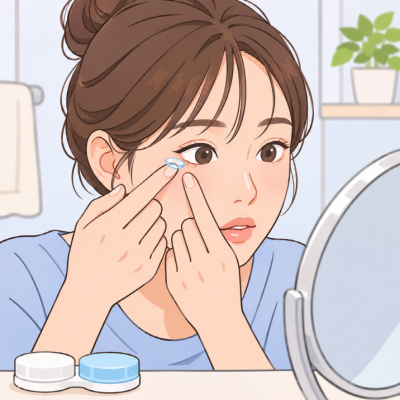
Hello! Today we're going to look at the problems that can arise from wearing contact lenses for long periods. Contact lenses are more comfortable for daily activities than glasses and look more natural, but wearing them for extended hours or not caring for them properly can cause a range of problems for your eye health. In particular, some people brush off dryness or redness of the eyes while wearing lenses as simple fatigue. Today, we'll explore the problems that can occur from long-term contact lens wear and the proper way to use lenses to protect your eye health.

How does wearing lenses for long periods affect your eyes?
The cornea of the eye is a transparent tissue that needs oxygen to maintain normal function. Because the cornea has no blood vessels, it receives oxygen mainly through tears and the outside air. However, wearing contact lenses can reduce the amount of oxygen reaching the cornea, depending on the lens material, its oxygen permeability, and how long you wear them. Wearing lenses with low oxygen permeability for long hours, or sleeping with lenses in, can particularly raise the risk of corneal hypoxia.
If corneal hypoxia persists, symptoms such as corneal swelling, blurred vision, and redness may appear. In chronic cases, new blood vessels can grow around the cornea, a condition called corneal neovascularization. For this reason, it's important to stick to a wearing time that suits the characteristics of your lens product and your eye condition.
Problems Caused by Prolonged Contact Lens Wear
1) Dry eye, eye foreign-body sensation
- One of the most common discomforts of wearing lenses for a long time is dryness. Lenses can affect the stability of the tear film, and when tear evaporation increases, your eyes may feel stiff or have a gritty, sand-in-the-eye sensation. Dryness can get worse especially when you spend long periods on a computer or smartphone, since you blink less often. If your eyes often ache or feel uncomfortable, and the discomfort grows the longer you wear your lenses, it's a good idea to check whether you have dry eye syndrome.
2) Keratitis, corneal damage
- Wearing contact lenses can cause microscopic scratches on the surface of the cornea. If lenses are contaminated, or if you put them in without washing your hands thoroughly, bacteria and other microorganisms can enter the eye and lead to infectious keratitis. Swimming or showering while wearing lenses is especially risky because it can raise the chance of infection, so be careful. If you experience severe eye pain, redness, light sensitivity, or reduced vision, remove your lenses immediately and see an eye doctor.
3) Development of corneal neovascularization
- The cornea is a transparent tissue that normally has no blood vessels. When the oxygen supply remains insufficient for a long time, blood vessels may grow in from the edge of the cornea to compensate, resulting in corneal neovascularization. There may be no noticeable symptoms in the early stages, but once the vessels reach the center, they can affect corneal clarity and vision. For this reason, people who wear lenses long-term should have their corneal health checked regularly.
4) Allergic conjunctivitis
- Allergic reactions can be triggered by proteins or deposits that build up on the lens surface, or by ingredients in lens care solutions. Typical symptoms include itchy eyes, redness, mucus discharge, and discomfort while wearing the lenses.
How to Use Contact Lenses Safely
Everyday care habits are key to preventing eye health problems caused by contact lenses.
1) Wash your hands thoroughly before putting in lenses
- Wash your hands with soap and dry them completely before inserting your lenses, so that bacteria or debris on your hands don't transfer to your eyes through the lenses.
2) Follow the replacement schedule
- Discard daily lenses after one use, and replace two-week or monthly lenses according to the set schedule. Even if you have days when you don't wear them, check the replacement guidelines specified by the product.
3) Don't rinse lenses with tap water
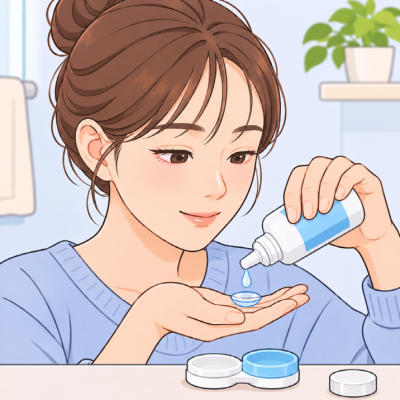
- Tap water may contain microorganisms, so it should never be used to clean or store lenses. Use a care solution designed for your lens type, and never top off old solution by adding fresh solution to it.
4) Don't wear lenses when your eyes are uncomfortable
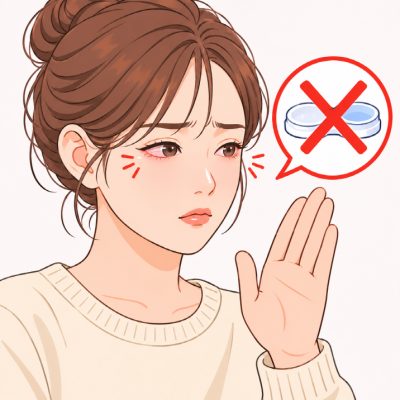
- Continuing to wear lenses when your eyes are red or painful can make the condition worse. If symptoms appear, remove your lenses and see an eye doctor if needed.
If your eyes become repeatedly red after long hours of lens wear, or if you develop a foreign-body sensation, pain, or vision loss, we recommend seeing an eye doctor. We hope this article was helpful.
Frequently Asked Questions
What eye problems can occur from wearing contact lenses for a long time?
Long-term wear can lead to dry eye, corneal hypoxia, keratitis, corneal neovascularization, and allergic conjunctivitis, among other issues. If corneal hypoxia persists, you may experience corneal swelling, blurred vision, and redness.
Why is it dangerous to sleep in contact lenses?
Sleeping in your lenses raises the risk of corneal hypoxia. Because the cornea has no blood vessels, it gets its oxygen mainly from tears and the outside air.
What should I do if my eyes feel dry and red?
If symptoms appear, remove your lenses and see an eye doctor if needed. If you have severe eye pain, redness, light sensitivity, or vision loss, see an eye doctor right away.
How should I follow the contact lens replacement schedule?
Discard daily lenses after one use, and replace two-week or monthly lenses according to the schedule set by the product. Even on days you don't wear them, check the product's replacement guidelines.
Can I clean my lenses with tap water?
No. Tap water may contain microorganisms, so it should not be used to clean or store lenses. Use a care solution designed for your lens type, and never top off old solution with fresh solution.
How can I wear contact lenses safely?
Before putting in your lenses, wash your hands thoroughly with soap and dry them well. Follow a wearing time and replacement schedule that suit the product and your eye condition, and avoid wearing lenses when your eyes feel uncomfortable.