2026-11-28
Straight Lines Look Bent? Macular Degeneration and Changes in Central Vision
Straight lines that look bent can signal a problem with the macula. This guide covers metamorphopsia, the types of macular degeneration, how it's tested, and ways to protect your eyes.
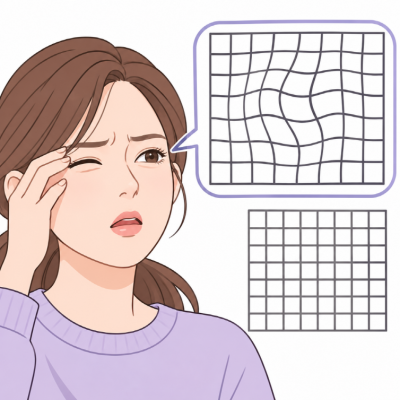
Hello! Today, we're going to take a look at the symptom of lines appearing bent. If door frames or window frames that normally look straight suddenly start to look curved, it's easy to assume it's just eye strain. Some people also notice that letters look wavy when they read, or that the lines on floor tiles look distorted. When straight objects appear bent like this, you should consider whether there is a problem with the macula, the part of the eye responsible for central vision. In particular, macular degeneration can lead to vision loss, so it's important to notice early changes.
Why Do Straight Lines Look Bent?
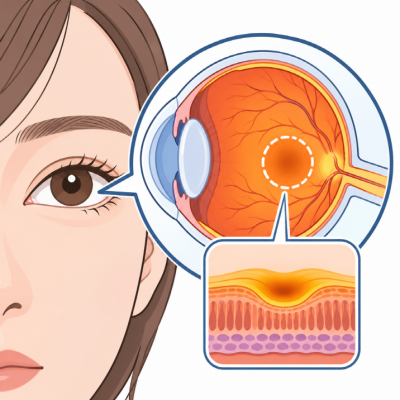
Inside our eyes is a tissue called the retina, which detects light. The macula sits at the center of the retina and is responsible for clearly distinguishing the shape and color of objects. The macula plays an important role when reading text, recognizing faces, and observing small objects. When the macula develops swelling or structural changes, the image formed on the retina becomes distorted, and straight lines can appear bent. This phenomenon is called metamorphopsia, and its typical symptoms include the following:
1) Door frames or window frames look bent
2) Straight lines on checkerboards or tiles look wavy
3) Letters look squished, or some parts look smaller than normal
4) People's faces look distorted
5) The center of your field of vision looks blurry or dark
These changes may appear in one eye first, and when both eyes are used together, you may not notice the problem.
What Is Macular Degeneration?
Macular degeneration is a condition in which degenerative changes occur in the macula, the center of the retina, affecting central vision. Age-related macular degeneration, which develops with aging, is the best-known type, and it is broadly classified as dry or wet.
1) Dry macular degeneration
- Drusen, a type of deposit, accumulate beneath the retina, or the retinal tissue atrophies. In the early stages, there may be no obvious symptoms, and in some people, central vision gradually declines.
2) Wet macular degeneration
- Abnormal blood vessels grow beneath the retina, causing bleeding or fluid leakage. Vision may decline relatively quickly, or objects may appear bent. In particular, if wet macular degeneration is not treated in time, it can leave serious damage to central vision, so early diagnosis is essential.
How Is Macular Degeneration Tested?
If straight lines look bent, an eye doctor can perform a vision test, a fundus examination, and other tests. In particular, OCT (optical coherence tomography) shows a cross-section of the retina, allowing doctors to check the thickness of the macula and any structural changes. For checking changes in central vision on your own, there is the Amsler grid test. However, this only helps with self-checking and cannot replace an accurate diagnosis. If lines suddenly start to look bent or your central vision changes abruptly, see an eye doctor promptly rather than relying on self-testing.
How to Prevent Macular Degeneration and Keep Your Eyes Healthy
Macular degeneration is closely linked to aging, but lifestyle habits and other risk factors can also have an impact. In particular, smoking is known to be a major risk factor for macular degeneration, so quitting is recommended. In your daily life, it's good to eat a balanced diet with a variety of foods, such as green and yellow vegetables and fish, and to maintain regular physical activity. If you have a chronic condition such as high blood pressure or dyslipidemia, managing it properly is also important. And if you have a family history or are at higher risk of age-related macular degeneration, check your retinal health with regular eye exams.
Straight lines that look bent or letters that look distorted can be a sign of a problem with the retina, unlike simple vision loss. In particular, if symptoms appear suddenly or central vision drops in one eye, you should check for possible retinal diseases, including macular degeneration. We hope this article helps.


Frequently Asked Questions
What conditions should I suspect if straight lines look bent?
If straight lines look bent, you should consider whether there is a problem with the macula, which is responsible for central vision. Since macular degeneration can lead to vision loss, it's important to notice early changes.
What types of macular degeneration are there?
Macular degeneration is broadly divided into dry and wet types. Dry macular degeneration involves drusen, a type of deposit, building up beneath the retina or the retinal tissue atrophying. Wet macular degeneration involves abnormal blood vessels growing beneath the retina, causing bleeding or fluid leakage.
Should I see a doctor right away if straight lines look bent?
If lines suddenly start to look bent or your central vision changes abruptly, you should see an eye doctor promptly rather than relying on self-testing. Self-check methods such as the Amsler grid are only a supplementary aid and cannot replace an accurate diagnosis.
How do eye doctors test for macular degeneration?
Eye doctors can perform vision tests and fundus examinations, and use OCT to view a cross-section of the retina and check the thickness of the macula and any structural changes. At home, you can monitor changes in central vision with the Amsler grid test, but it cannot replace an accurate diagnosis.
How can I prevent macular degeneration?
Lifestyle habits can affect your risk of macular degeneration. Smoking is a major risk factor, so quitting is recommended. It's also good to eat a balanced diet with green and yellow vegetables and fish, stay physically active on a regular basis, and manage chronic conditions such as high blood pressure and dyslipidemia.
Is it okay if straight lines look bent in only one eye?
You can't assume it's fine just because it's only in one eye, since changes may appear in one eye first. When both eyes are used together, the problem may go unnoticed. If central vision drops in one eye, it's wise to check for possible retinal conditions.